Sunday, November 04, 2007

in ... the dumb things that non-climbers say ...

Found in rockclimbing.com

"And how do you get the rope up there?"
Answer1: "It just kind of grew down from that tree."
Answer2: "I used a harpoon. It took several tries."
Answer3: "We've trained a couple of these squirrels to run the rope up and loop it down the anchor."
Answer4: "You don't." - usually said as the lead climber begins to climb -

"How does the last person get down?"
Answer: "Just like I did."
"Well, then, who carries the rope down?"
Answer: "No one, we leave it there for the next party of climbers." - this usually said as the last person down is pulling down the rope -

"Hey, are you training to be Tom Cruise's double?"
Answer: "No. He's training to be mine."

"Rock climbing is your hobby; but what do you do for exercise?"

"Is there a strip-club or something at the top of the cliff?"

Then the all-time classics:

"Do you know there's an easier way around the back?"


and the most important and most classical of all:

"Why?"


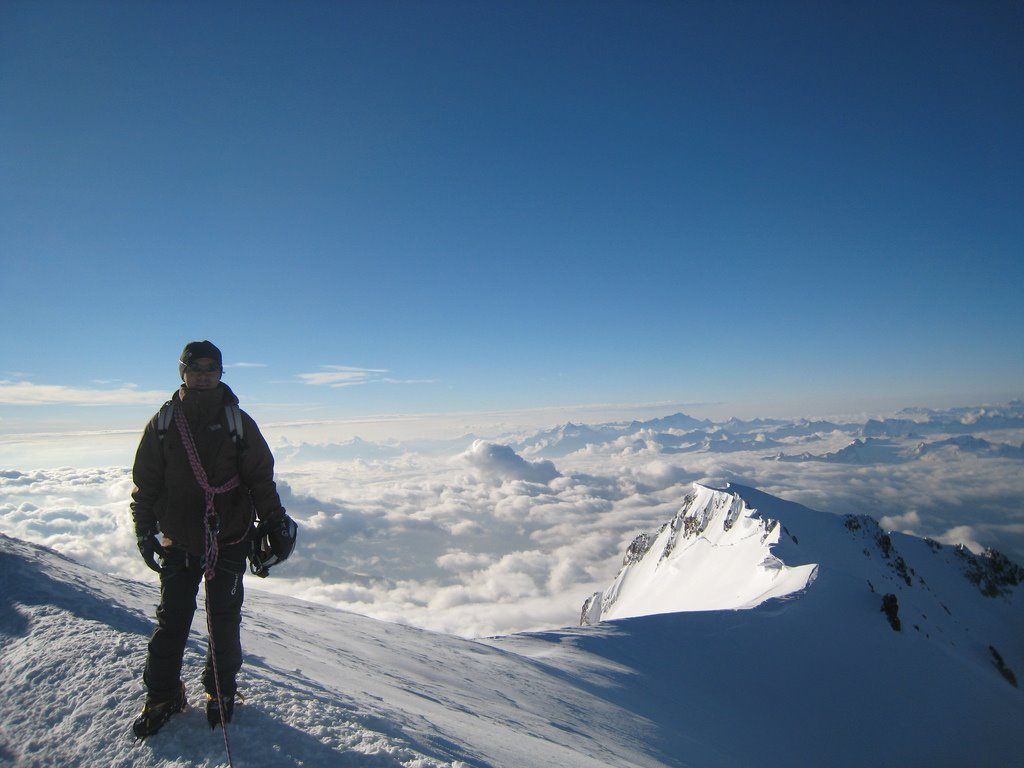
Exactly. Why? Why do we climb?

Why do we have to get to the top of the rock? Why do we climb another rock, another mountain ... once up there, the views are all the same?


----------


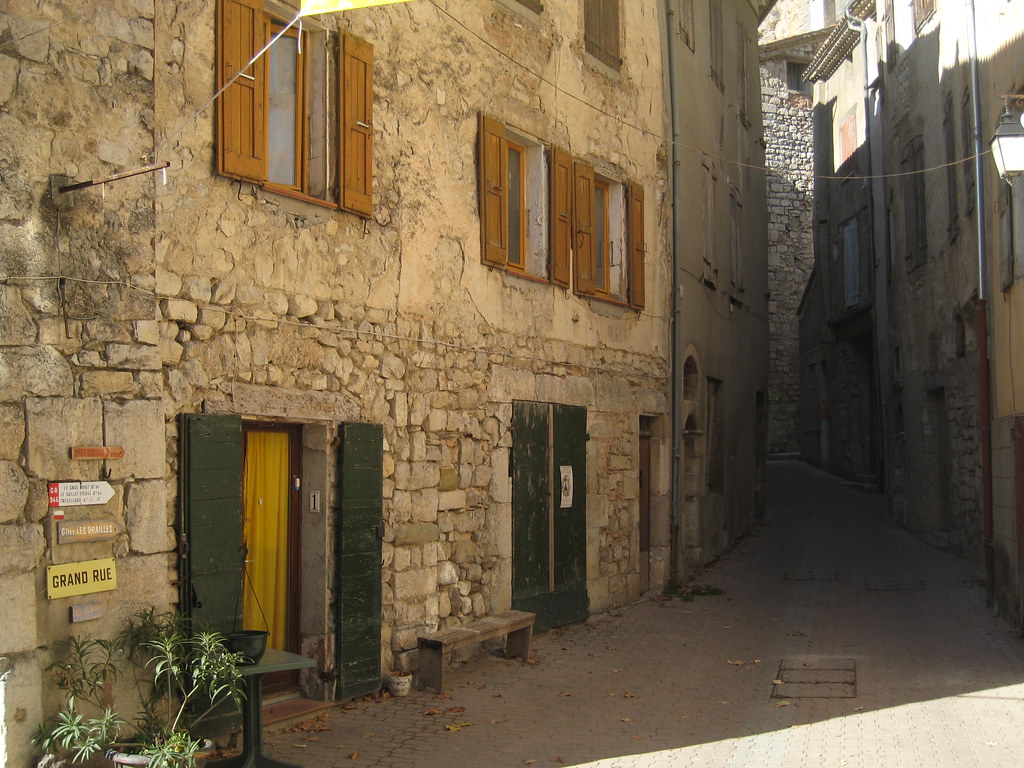
Orpierre is another world I never knew existed. A sleepy medieval village in Les Hautes-Alpes (the upper Alps) department popular with climbers but ignored by everybody else (except perhaps a few stray tourists looking for a quiet getaway from the touristy Provence or Côte d'Azur), it maintains the very traditional French character and mentality.


Friendly, laid-back, and trusting. No matter where you're from, what language you speak.

Just like in Fixkes's 'kvraagetaan. A world from the good-old-time that knows no gsm (unless you climb 500m to the top of the cliffs that is), no cinema, no police station, no restaurant, no hypermarket, not even a post office. Just a small bar, an épicerie, a bakery, and--of course--a climbing shop. Its main street--La Grand Rue--is only about 1.5m wide. A place where its villagers still live the life that knows no hate, no prejudice, no worries, no ambition, no regret ... a place where everything is still so simple, and a week vacation in a nice traditional gîte costs no more than €150, everything included.

Including one heck of an experience that--to me--beats any $5000 vacation in the Bahamas or any other "exotic" places.


----------


Why do we climb? Why do we have to get to the top of the rock? Why do we climb another rock, another mountain ... once up there, the views are all the same?

Why do we work, why do we chase dreams, why do we have to always be better than everybody else, better than yesterday? Why do we live?

We, climbers, climb because we love to climb.

Monday, October 22, 2007

... in life and childhood dreams (memorable quotes from Dr. Randy Pausch--delivering his last lecture in Carnegie Mellon's "last lecture series"

"How do you measure a year in the life?" - The Rent

How about ... in Randy Pausch's childhood dreams?

"It's wonderful to be here. What Indira didn't tell you is that this lecture series used to be called the "Last Lecture". If you had one last lecture to give before you died, what would it be? I thought, damn, I finally nailed the venue and they renamed it!"

Delivering his "last lecture" in Carnegie Mellon's "Last Lecture Series" with 3-6 months left of good health, Randy talked about his life and his childhood dreams. For complete lecture video and transcript, they are available in Randy's website.

"So what are my childhood dreams? ... And there I actually have a picture of me dreaming. I did a lot of that. You know, there's a lot of wake up's! I was born in 1960. When you are 8 or 9 years old and you look at the TV set, men are landing on the moon, anything's possible. And that's something we should not lose sight of, is that the inspiration and the permission to dream is huge ... So what were my childhood dreams? ... Being in zero gravity, playing in the NFL, authoring an article in the World Book Encyclopedia ... Being Captain Kirk ... I wanted to become one of the guys who won the big stuffed animals in the amusement park, and I wanted to be an Imagineer with Disney ... OK, so being in zero gravity. Now it's important to have specific dreams. I did not dream of being an astronaut, because when I was a little kid, I wore glasses an they told me oh, astronauts can't have glasses. And I was like, mmm, I didn't really want the whole astronaut gig, I just wanted to float. So, and as a child, prototype 0.0 [slide shown of Randy as a child lying in floating-formation on a table top] But that didn't work so well, and it turns out that NASA has something called the Vomit Comet that they used to train the astronauts. And this thing does parabolic arcs, and at the top of each arc you get about 25 seconds where you're ballistic and you get about, a rough equivalent of weightlessness for about 25 seconds. And there is a program where college students can submit proposals and if they win the competition, they get to fly. And I thought that was really cool, and we had a team and we put a team together and they won and they got to fly. And I was all excited because I was going to go with them. And then I hit the first brick wall, because they made it very clear that under no circumstances were faculty members allowed to fly with the teams. I know, I was heartbroken. I was like, I worked so hard! And so I read the literature very carefully and it turns out that NASA, it's part of their outreach and publicity program, and it turns out that the students were allowed to bring a local media journalist from the home town. And, [deep voice] Randy Pausch, web journalist. It's really easy to get a press pass! So I called up the guys at NASA and I said, I need to know where to fax some documents. And they said, what documents are you going to fax us? And I said my resignation as the faculty advisor and my application as the journalist ..."

And he continued ...

"... Being an Imagineer. This was the hard one. Believe me, getting to zero gravity is easier than becoming an Imagineer ... And so I bided my time and then I graduated with my Ph.D. from Carnegie Mellon, thinking that meant me infinitely qualified to do anything. And I dashed off my letters of applications to Walt Disney Imagineering, and they just sent me some of the damned nicest go-to-hell letters I have gotten. I mean it was just, we have carefully reviewed your application and presently we do not have any positions available which require your particular qualifications ... So that was a bit of a setback. But remember, the brick walls are there for a reason. The brick walls are not there to keep us out. The brick walls are there to give us chance to show how badly we want something. Because the brick walls are there to stop the people who don't want it badly enough, they're there to stop the *other* people."

But sometimes, some dreams are just out of reach. Talking about his dream of playing in the NFL, Randy said:

"Experience is what you get when you didn't get what you wanted."

And in the end, he sums everything up nicely:

"Be prepared. Luck is truly where preparation meets opportunity."

"It's not about how to achieve your dreams. It's about how to live your life. If you live your life the right way, the karma will take care of itself. The dream will come to you."

(And now, just for fun: ... in more sunsets ... this time from Le Mt-St-Michel in Normandie, France)

... in paper tickets, in warm meal on-board, and--who would've guessed--stainless steel knives and forks!! (Greece: a journey back through time ...)

Cyn and I (literally) in the hands of God Dionysus

Greece ... Ian summed it up nicely: "Greece ... great lots of ancient history ..." Carolien has had enough rubles, but she remembered the beautiful cities, great food + wine, beaches, and good weathers.

And Cynthia? "... annoying crickets playing the symphony at night ... roosters or peacocks or cows mooing in the early morning ... the stray cat ..."

It was about 4 in the morning when Cynthia rolled over onto my side of the tent, whispering in panic, "Hey Adi Adi Adi ... There's something that feels like someone's limb on top of my leg here!!"

Actually, the stray cat has just found a warm spot to sleep.

Then there's the scooter and the cheap rental car on adventurous gravel road. The "open-door" kitchen that solves all language barriers we thought we were going to have to encounter. And the annoying self-parking donkeys.


You really want to know what I'm talking about? Why not venture out and experience yourself all the daylights ...

(Cyn's idea of a day on the beach: "I don't wanna get any darker!")

... and sunsets ...
(sunset over Naxos beach and the Gate of Dionysus)

... and the midnights and cups of coffee ...
(ok, more like in nice cool evenings over few glasses of Santorini wines)


(All pictures, as usual, are posted on my Flickr photo album)

Wednesday, June 20, 2007

... in something "bigger": social responsibility that pays

A few years ago, out of curiosity I browsed around school rankings and I was trying to see if there were strong correlations between a school's rank and the average salary of its graduates. And it stroke me hard: in several professional fields of studies (medicine, law, and scientific research), there were definitely strong and negative correlations between rank and average salary, at least among the top tier schools.

A friend told me: "Why? Easy. You don't go to Harvard Med if you wanted to practice medicine--which is where the money is. You go there to learn how to find the cure for cancer and a solution to AIDS in Africa ... a Utopian dream that does not immediately--if ever, during this lifespan--pay off."

As a person, I've always wondered what life is and what life should be. And as an aspiring leader ... I continuously ask the question: what makes an organization better than others? How do you recruit and retain the best and the brightest? And how do you create value and earn a living (and provide comfortable livings for your followers) while staying true to your values?


The Wall Street Journal, June 19th 2007
Law Firms Willing to Pay to Work for Nothing

"Pro bono work at Big Law has evolved from an act of noblesse oblige into, at least in part, a business initiative. Law firms want strong pro bono programs as a way to recruit and retain top law students and junior associates, who are often more eager than their predecessors to do pro bono work ... The big firms are 'having to dig deeper to differentiate themselves,' say Esther Lardent, the president of the Pro Bono Institute at Georgetown University Law Center. 'Dedicating to pro bono is a way for a firm to say 'Our culture isn't entirely about maximizing profits, but about something bigger.' ... ": Ashby Jones


Harvard Business Review, December 2006
Strategy & Society: The Link Between Competitive Advantage and Corporate Social Responsibility

"Successful corporations need a healthy society. Education, health care, and equal opportunity are essential to productive workforce. Safe products and working conditions not only attract customers but lower the internal costs of accidents ... Any business that pursues its ends at the expense of the society in which it operates will find its success to be illusory and ultimately temporary ... At the same time, a healthy society needs successful companies ... If governments, NGOs, and other participants in social society weaken the ability of business to operate productively, they may win battles but will lose the war, as corporate and regional competitiveness fade, wages stagnate, jobs disappear, and the wealth that pays taxes and supports nonprofit contributions evaporates ... Leaders in both business and civil society have focused too much on the friction between them and not enough on the points of intersection ... When value chain practices and investments in competitive context are fully integrated, corporate social responsibility becomes hard to distinguish from the day-to-day business of the company. Nestlé, for example, works directly with small farmers in developing countries to source the basic commodities, such as milk, coffee, and cocoa, on which much of its global business depends. The company's investment in local infrastructure and its transfer of world-class knowledge and technology over decades has produced enormous social benefits through improved health care, better education, and economic development, while giving Nestlé direct and reliable access to the commodities it needs to maintain a profitable global business ... NGOs, governments, and companies must stop thinking in terms of 'corporate social responsibility' and start thinking in terms of 'corporate social integration' ...": Michael E. Porter, Professor, Harvard Business School, and Mark R. Kramer, Senior Fellow, Harvard's John F. Kennedy School of Government


And, the truth is ... sometimes doing the good things is not only comforting ... but also makes strategic sense ...

Monday, November 13, 2006

... in daylights, in sunsets, in (sleepless) midnights, ...

Harvard Business Review, February 2004
Success That Lasts

"Pursuing success is like shooting a series of moving targets. Each time you hit one, five more pop up from another direction. Just when we've achieved one goal, we feel the pressure to work harder to earn more money, exert more effort, possess more toys ... many people assume success requires a winner-takes-all approach. They believe that success depends on putting all your energy into achieving one goal, be it a single-minded focus on your job or a commitment to being the best soccer mom in your community. But no matter how noble, one goal can't satisfy all of a person's complex needs and desires ... Success requires more than a heart-pounding race to the finish line. Our research uncovered four irreducible components of enduring success: happiness (feelings of pleasure or contentment about your life); achievement (accomplishments that compare favorably against similar goals others have strived for); significance (the sense that you've made a positive impact on people you care about); and legacy (a way to establish your values or accomplishments so as to help others find future success) ... Unless you hit on all four categories with regularity, any one win will fail to satisfy. You'll experience what we call the 'wince factor': You know you're doing what is right, but it still feels like a loss. You're preoccupied with thoughts of the other things you could be doing or getting ...": Laura Nash, senior research fellow, and Howard Stevenson, Professor, Harvard Business School

I started this blog almost two years ago for the same reason I am now writing this post. Another year was about to go by, things were going well ... yet I tossed and turned at night asking "now what?"

"Succcess is a journey, not a destination," Arthur Ashe once said.

And it has been a wonderful journey indeed. Honestly, I don't think I could've asked for more. At the age of 27, I have traveled, visited, watched, seen, and experienced more things than what most people ever have during their entire lives. I have played with almost all the toys money could buy--including gadgets that many (especially in Europe) thought had existed only in sci-fi movies. I have constantly pushed my limits, and from time to time, beat the odds.

Yet, despite all this, I still feel like I'm missing something, constantly wondering, "now what?"

It's not that I feel that I have nothing more to prove. I still enjoy working on the new challenges and beating the even more (seemingly) impossible odds.

It's just that I feel like all I do is climb, climb, climb. But the higher I climb, the greater the stake gets, the fiercer the competition becomes. And the harder the falls. Which makes turning back or slowing down--even just to look back--never seems to be an option. "When you stand still while everybody else is moving forward, you are actually moving backwards," my father told me all the time. "And the world would not just stop to wait for you."

Then last week I met someone who had always lived her life like there would be no tomorrow. She has lived in six or seven countries (I lost track) in three continents and speaks six languages ... mostly learned "on the road". Unlike me, she did all these without much planning. "I bought a ticket ..." and somehow she managed to get by through the ways of hitchhiking, camping out the highways and the rest stops, and doing everything and everything: from farm jobs, tourism works, and miscellaneous odd jobs to support herself.

"As for the future? I don't know that. But for now, I will try to stay in Belgium to care for my grandma."

It probably is not easy to be her ... yet she seems to live a life that brings her satisfaction in everything that she does. No baggages, no regrets, no worries.
...

Realistically speaking: chances are, there would be tomorrow. And the next year. And the year after. And when that day comes, I probably would not regret all the things I had done to prepare for that day.

Yet, maybe I have felt so lost because I have been so busy trying to meet tomorrow's challenges that I have forgotten about the other things that make today, tomorrow, the next year, and all the following years, worth living.

The little things that turn even the simplest forms of successes ... meaningful.


in daylights ...


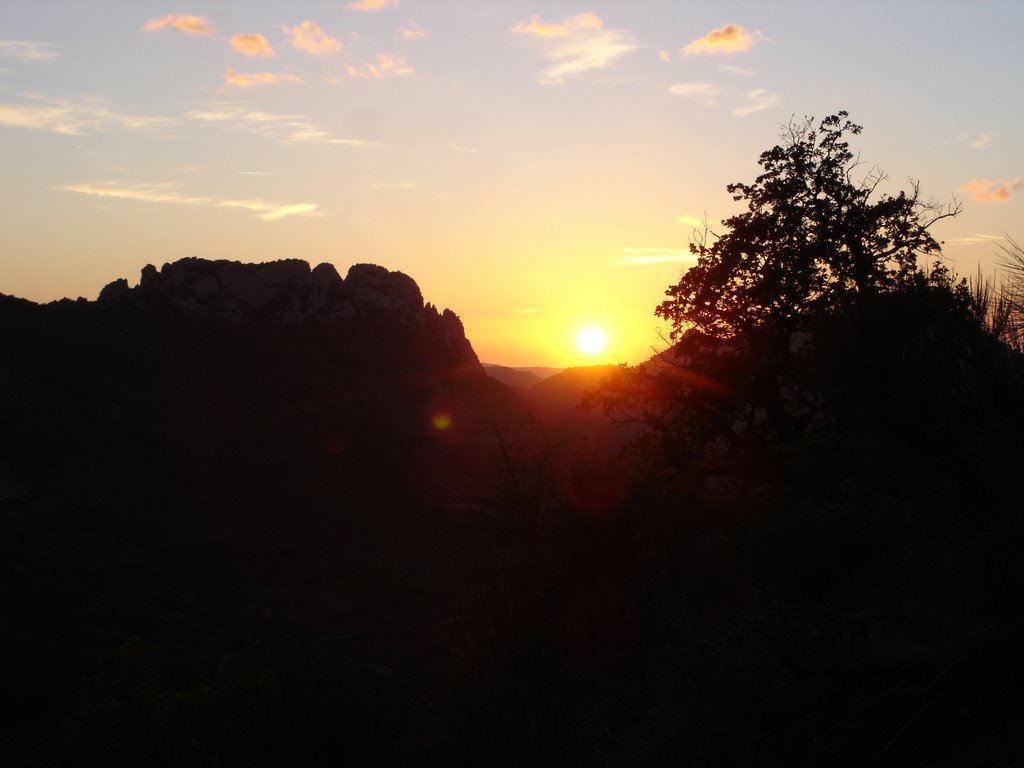
in sunsets ...

... and the little things that make life worth living

Wednesday, August 09, 2006

Cup'oCofi's photo album is now online!

Dear all,

No, Cup'oCofi hasn't been swallowed by the earth.

And no, he hasn't eloped with one of Belgium's hot chics.

But yes, he has been enjoying Belgium's unusually warm and sunny weather. And there are too many things going on in his work and his life as well.

And yes, he still loves blogging. It's just that he hasn't found enough time to write lately. There's so much to tell; so much to share. But there's so much to explore and to experience, as well.

He should be back to the blogging world probably in the early October, when Belgium settles down into the long, cloudy winter.

In the meantime, you can try to follow his footsteps at http://picasaweb.google.com/cupocofi/

Backpacking around the Bernina Mountain: Svizza - Italia - Svizza

Wednesday, May 10, 2006

... in new languages, new cultures, and new friends ... in paperworks, confusions, frustrations, and well ... fun!! Ieper: First Year Recap

Welcome to Europe Belgium. Where children's merry-go-round plays "Fuck Me Like a Whore" as a background music and where Brussel's dark alleys and certain "Germanic lifestyle" could make New Orleans, Cancun, and even the walletjes look like some humble theme parks.

Where "moral" stands for the culture of caring for the weak and the future generations and has less to do with sticking your nose in something none of your business.

Where, for some, life is all for savoring ... and for others, life is for work hard, play hard, ... and grumbling over the good 'ol Belgian bureaucracy over some good 'ol Belgian beers afterwards.

Where I get more and more confused in trying to answer the seemingly simple question: 'Where are you from'?

Someone once told me that 'home is where your heart is'. But my heart does not belong to a specific location or a specific person within a location. It is with the people, the experience, and the enjoyment of the things that I do. I don't really own a "home" that I crave to return to. But in many corners of this planet, I have someone who will gladly meet me in hour's notice. And in almost every corner of this planet, I have someone who would gladly come to visit me now that I live in Europe.

This is my curse, my blessing, ... my life.

Some think that the grass is always greener on the other side of the fence, and some think that the grass is greenest on their side of the fence (hence a taller fence is needed). It's just hard to appreciate life until you walk on someone else's shoes, isn't it? But I've walked the footsteps of many strangers, and I've learned that what really matters is not how green the grass is ...

... it's how you make the best of it with those around you ...

Sunday, April 09, 2006

... in humility, in invisible heroes, in power of persuasions ... and, uhm, brute intimidations?

We probably all make jokes about the "power of persuasions". Well, after all those leadership trainings they've been giving us ... after all those Harvard Business Review articles on secret change agents and level 5 leaderships ... often, our fearless big bosses simply resort to the primitive technique of "persuading" that works in no time, which can be better termed, really ... brute force.


"... Best leaders inspire by example. When that's not an option, brute intimidation works pretty well, too.": despair.com

Harvard Business Review, February 2006
The Great Intimidators

"We hear a lot of praise for emotionally intelligent, even humble leaders. But change is scary, and you sometimes need scary leaders to steer you through ... Great intimidators are not averse to causing a ruckus, nor are they above using a few public whippings and ceremonial hangings to get attention. And they're in good company. A list of great intimidators would read a bit like a business leadership hall of fame: Sandy Weill, Rupert Murdoch, Andy Grove, Carly Fiorina, Larry Ellison, and Steve Jobs would be just a few of the names on it ... Beneath their tough exteriors and sharp edges, however, are some genuine, deep insights into human motivation and organization behavior. Indeed, these leaders possess what I call political intelligence. In all our recent enchantment with social intelligence and soft power, we've overlooked the kinds of skills leaders need to bring about transformation in cases of tremendous resistance or inertia ...": Roderick M. Kramer, social psychologist and Professor or Organizational Behavior, Stanford Graduate School of Business

One of the greatest benefits of my frequent moves is the opportunity to watch, learn, and adapt to the many cultures and leadership styles along my way. It's an opportunity to see what works and what does not at the different sets of conditions.

Here in the Ieper facility--the company's best performing site--I have no doubt that it is the invisible leaders that keep the facility running at the highest operational discipline. This being said, I have to add yet another amazing thing that Ieper does: the two-or-three giant leaps that it manages to clear while everybody else still tinkers with how--or sometimes whether--to make the first step.

Change is scary and to tread new tracks usually requires stumbles and falls. And falls, no matter how controlled, suck. Therefore sometimes it takes more than coaching sessions to get people to reach out and make those giant leaps.

But then, I wonder, with the retention of the most talented minds comes at high premium these days, at what cost can you sustain such people treatment?

Great intimidators trample on people's feelings and set impossible standards. Even when others meet those standards, they're given little if any credit ... But despite all the drawbacks, my research shows, great intimidators are often magnets for the best and brightest ... Intimidators instill fear in their employees, but the really great ones instill something else as well--and that's another way in which they are different from your run-of-the-mill organizational bully. As one former aide of legendary tough guy Admiral Hyman Rickover told me, 'Not measuring up in his eyes meant more to me than anything else--even my father's'. In similar vein, a former Pixar employee said of his time working under Steve Jobs, 'You just dreaded letting him down. He believed in you so strongly that the thought of disappointing him just killed you.' ... people like to work for great intimidators because of what can be learned from them and because they inspire great performance. Many people said they did their best work ever when working for a great intimidators ...": Roderick M. Kramer

Sometimes, we just can't deny the effectiveness of that good 'ol baseball bat ... The only problem with this approach is that often the change will not stick ... as soon they no longer see the baseball bat, people will quickly resort to the old habbit. But, I guess sometimes not all changes have to last, and some changes, by nature, are irreversible. In which case, pulling out the sledgehammer is not always a bad thing to do. I guess the trick is knowing when and where to use what ... and be darn sure with what you're doing.

Sunday, March 26, 2006

... in daylights, in springtime, in crocuses ... in happiness!

Spring and Crocus in Ieper, Belgium

We just had 8 straight days of clear blue skies here in Belgium. After some 30-something days with the typical depressingly grey Belgian skies, this is a cause for celebration. Spring is finally here! Just few weeks back, Studio Brussel interviewed random people in train stations: "What makes you happy?" Deprived from sun, daylights, and clear blue skies, my answer was obvious.

But economic and behavioural science researchers, in the meanwhile, think happiness is a bit more complicated than that.


The Wall Street Journal, March 18 2006
Happiness Inc.

"David Blanchflower, a Dartmouth College economics professor, is a leader (in the research of putting a price on happiness) ... One study that he co-authored found that if you're single or in a miserable marriage, you'd need to earn $100,000 more each year to be as happy as a happily married person. His research also showed that if you have sex just once a month, you'd need to earn $50,000 more a year to be as happy as someone having sex once a week with a monogamous partner.": Jeffrey Zaslow

Ha! As I found out here in Europe, it takes a lot less than $50,000 to buy you sex several times a day!!!

And how much money would one need to earn to be as happy as Cup'oCofi--a young, attractive, country-hopping single guy? LOL. As usual, this is my blog, and any disagreement can be posted as comments!

Seriously. I believe happiness is all about attitude and will. If you want to be happy, you will find a way to be happy. If you don't want to be happy, you'd always find a reason not to be happy.

"The Constitution only gives people the right to pursue happiness. You have to catch it yourself.": Benjamin Franklin

Anyone had not seen Guido Orefice in "Life is Beautiful", should.

Saturday, March 18, 2006

in baby steps, giant leaps, and breakthroughs ...

Just last Wednesday I had an earful from my climbing partner during a rock climbing session for failing on an "easy" overhang. She (yeah, *she*) said, "You know what the problem was? You didn't even try!"

Harvard Business Review, February 2006
Take a Giant Step

The motto 'Evolution, not revolution' became bumper sticker fare when a faltering economy took out more upstarts than the battle of Camden. Tweaks, refinements, and enhancements to existing products rarely looked so good. You can cover lots of ground with a series of small steps, many companies realized. But in a race, competitors can usually match each small step. What's tough to beat are those giant, muscle-straining strides that take innovators off the well-trod path and drop them miles away on a different road where no one else is ... It's hard to spot opportunities for innovative leaps when you're preoccupied with baby steps. Iterative improvers believe that 'every day in every way, I get better and better'. Probably they will get better. Probably they won't get great.": Don Moyer

"On an overhang you can't just hang in there thinking and hoping you'd make it by making too many moves that don't get you anywhere. Your arms will get tired. You'd have to reach over and pull yourself out of there as quickly as possible. If you don't make it, then you fall and try again. But you didn't even try! That is why you did not make it--not lack of skill!"

Ouch.

It's true that most things start small. Nevertheless, when we talk about the world's most successful organizations, people often find less than half dozen big reasons why they succesful. People often forget that it is the big leaps--not the collections of small steps--that really makes up the difference. And it is true that it's the giant leaps that normally would take years to copy.

The problem is--just like climbing an overhang--sometimes we can't really see where we are going when we want to make that giant leap. So we'd reason that baby steps will get us there ... just a matter of time and patience. Therefore the excuses of "well if we take it one baby step at a time, we won't fall as hard".

But not necessarily less painful. We probably would not fall by taking baby steps. But we might fail to reach the top (or get there too late) for spending too much energy contemplating the next baby step. Usually, competitors don't give an earful. They just drive us out of business.

This being said, remember this post?

Wednesday, January 04, 2006

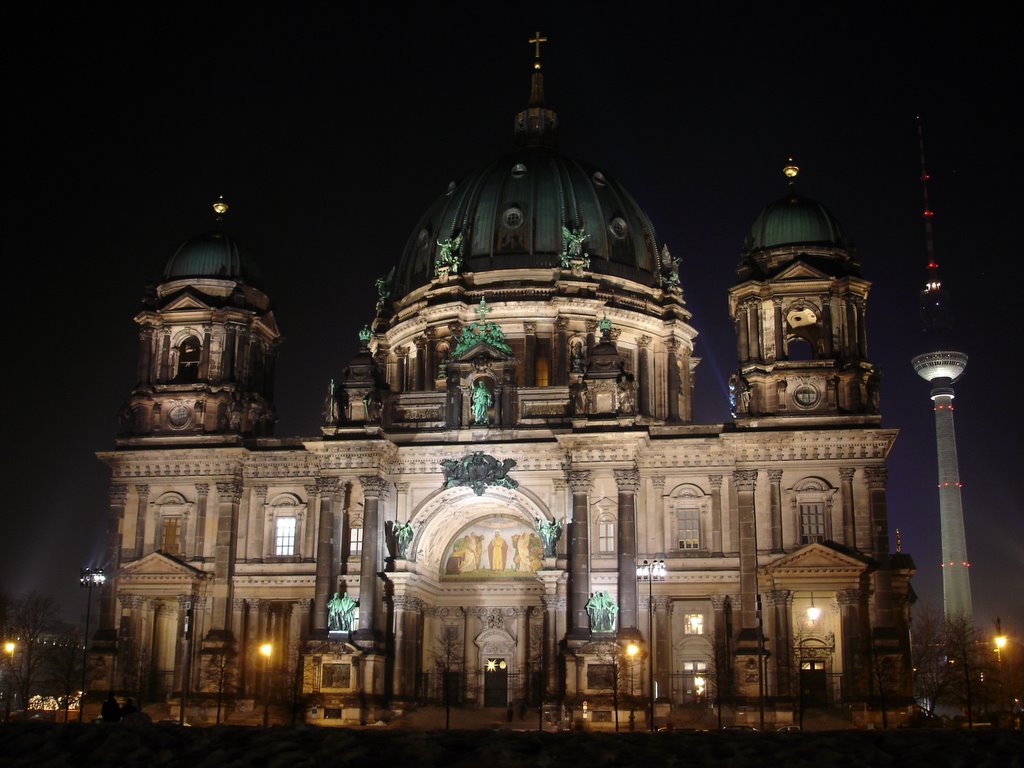
Gluckliches Neues Jahr ... von Berlin!

... in Bratwursts (German-sized), in sausages (German-sized), in gluhwein (original German-flavored), in Beers (German-sized) ...

... in PARTIES!!! (German-sized ... in 2-km long wide boulevard packed with the friendly, fun-loving, beer-loving Germans. Drunk Germans. Way drunk Germans. And we are having fun. German-sized.)


... where 2005 meets 2006, where the old meets the new ... Berlin, Deutschland.

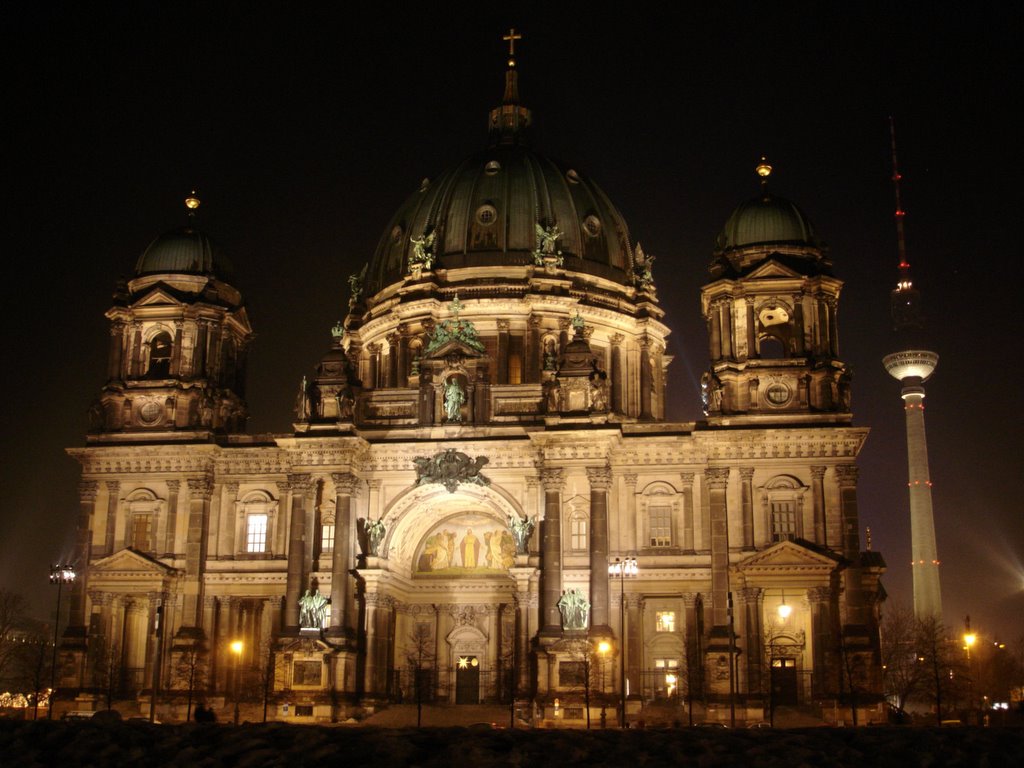
Below is picture of the Berliner Dom with Alexanderplatz's Fehrnsehturm Tor in the background


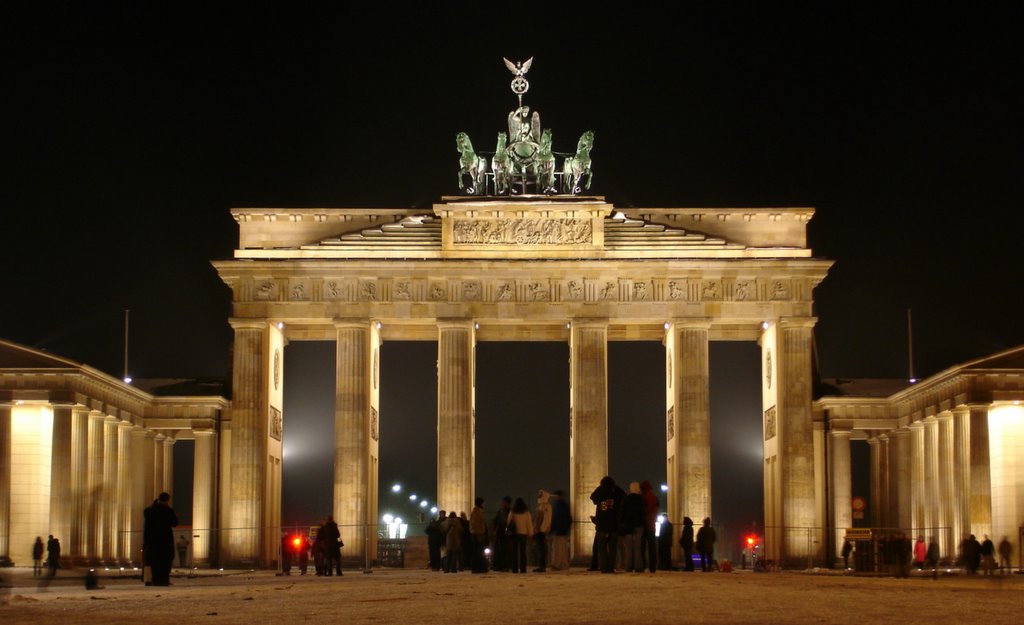
Unter den Linden: Brandenburger Tor. Napoleon liked it so much he stole the statue on top during the Napoleonic wars.


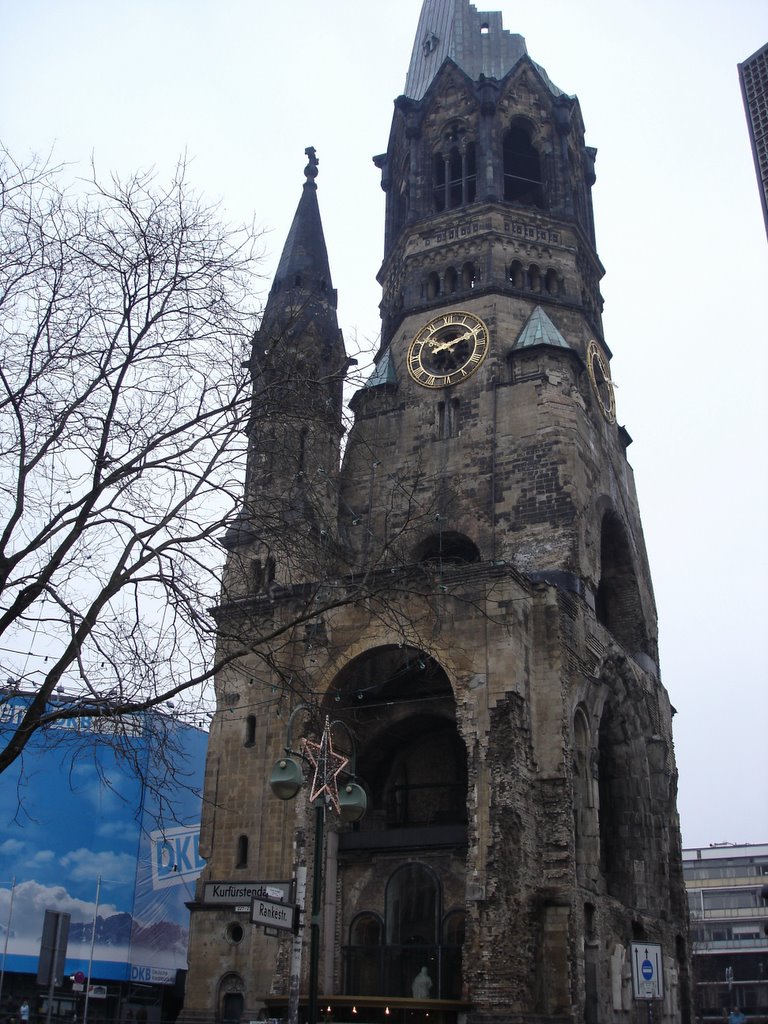
And in Kurfurstendam: a reminder ...


Sunday, December 25, 2005

Joyeux Noel des Francais Flandres!

Marche de Noel (Christmas Market) in Lille. Lille is a Flemish town that was annexed by the French in 1667. It has the unique characteristics of any Flemish town such as Le Grand Place (De Grote Markt), Flemish architecture, and--of course--bars serving the finest of Belgian Beers.

Saturday, December 24, 2005

We Wensen U Een Prettige Kerstmis en Een Gelukkig Nieuwjaar!

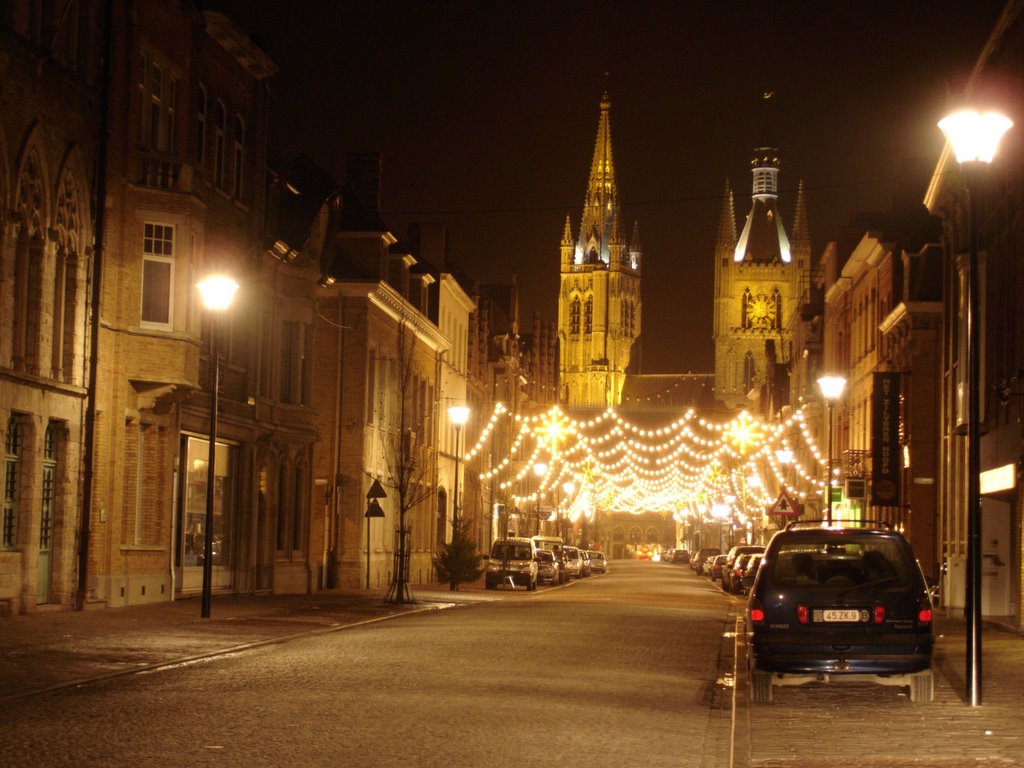
Ieper, Christmas Eve 2005. A view of the Cloth Hall now from the distance with the Christmas lights decorating the streets


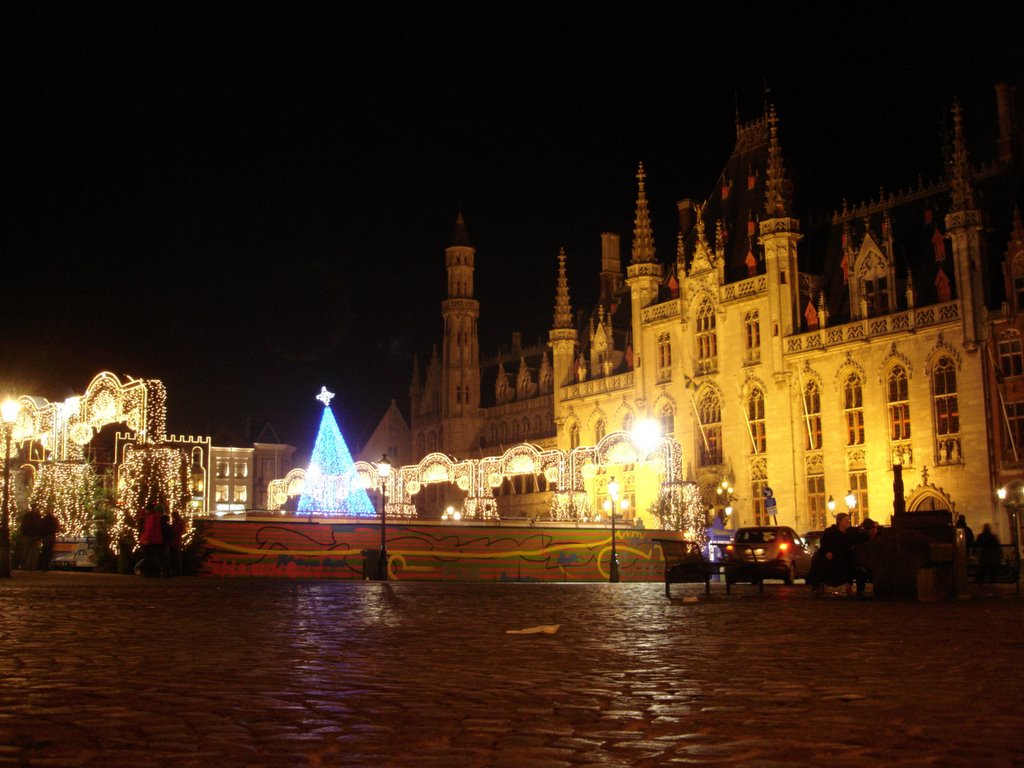
Christmas displays in Brugge, the capital of Provincie West-Vlaanderen. Some Chinese tourists asked me where to find Pizza Hut (a "traditional" Chinese Christmas dinner) in Brugge on Christmas eve ... Pizza Hut, in Brugge? Eh, anything open on Christmas Eve? Maybe Chinese food?


Another shot of the Grote Markt in Brugge


Wednesday, December 07, 2005

In Authenticity, Conformity, Sincerity, and well ... CONFUSION!!!! Ieper: Fifth Month

Just a few years ago, a controversial theory in EvoPsych--Evolutionary Psychology--suggested that every human was hard-wired racist. The thinking goes, during the cavemen ages, people who ventured deep into foreign territories and met foreigners--who looked different--were more likely to be enslaved and killed. Those who survived were those who killed a foreigner as soon as they saw one. Therefore, we are all descendants of racists, and therefore, we too are--genetically--racists.

Then how do you explain the success of eBay's business model? If we are so full of prejudices, why do 125 million (and growing) trade online with people they cannot even see, in a site created by a French-Iranian descent?

It seems like EvoPscych itself has been experiencing an evolutionary of its own. As Iterated Prisoner's Dilemma and Game Theory suggests, racist cavemen tribes might originaly get stucked in Nash Equilibrium where each retaliated when a member of its tribe was killed. But soon enough the people with common sense realized that a Pareto Equilibrium laid in armistice and cooperation. So they set aside their prejudices, reached the Pareto Equilibrium, and prosper ... while those without this common sense perished during the next harsh winters and dry spells.

So, we are all descendants of cavemen with common sense. Of course, evolution is not yet complete, and this is why United States is bombing Iraq and European Union won't tear down its walls on the Turkish borders.

In short, I believe that it is misunderstanding that breeds racism, and not the other way around.


The Wall Street Journal, December 7, 2005
Untranslatable Word in U.S. Aide's Speech Leaves Beijing Baffled

"In late September, Deputy Secretary of State Robert Zoellick spoke to a packed house of the National Committee on U.S.-China Relations in New York. The speech's punchline: 'We need to urge China to become responsible stakeholder' in the international system ... There was only one problem: What does it mean? The Chinese language has no corollary for 'stakeholder'. Some scholars translated it as 'participants with related benefits and drawbacks'. That implied China's interests might suffer if it attempted to meet Mr. Zoellick's 'responsible stakeholder' challenge ... The dustup in China over 'stakeholder' recalls the consternation that followed President Bill Clinton's proposal of U.S. 'engagement' with China amid a rough patch between the two sides in 1995. Chinese who spoke English were befuddled by a word that could mean 'both an exchange of fire and a marriage proposal' ...": Neil King Jr. and Jason Dean


Yes, we grew up in so many different languages and cultures, and it can be confusing. But if California can propel a Pierre Omidyar into a $60 billion business and 8,600 innovative jobs ... why can't we all?

A friend once said to me, "If you want to go see Europe, take a vacation ... heck, two vacations and go backpacking." I'd like to think that she just didn't want to see me go (hey, this is my blog, afterall; I'm allowed to think all I want). Another friend said something along that line: "You don't need three years unless you're really trying to scoop out all the alleys of Amsterdam and Paris". Now he is just plain jealous that he did not get to go (again, this is my blog ... any disagreement are welcomed and can be posted as comments ...).

I told them that by traveling, you get to see all the amazing Renaissance architectures, beautiful sunsets, and spectacular sceneries. But you'll never really get to understand the people. To walk the walk and to live the life simply are two totally different things.


Harvard Business Review, December 2006
Managing Authenticity: The Paradox of Great Leadership

"People want to be led by someone 'real' ... But while the expression of an authentic self is necessary for great leadership, the concept of authenticity is often misunderstood, not least by leaders themselves ... Authentic leaders remain focused on where they are going but never lose sight of where they came from. Establishing your authenticity is a two-part challenge. First, you have to ensure that your words are consistent with your deeds; otherwise, followers will never accept you as authentic. But it is not enough just to practice what you preach. To get people to follow you, you also have to get them to relate to you ... Authentic leaders know how to strike a balance between their distinctiveness and the cultures in which they operate. They do not immediately seek out head-on confrontations because they recognize that their survival as leaders (and, by extension, the survival of their initiatives) requires a measured introduction to, and adaptation of, the organization's established business networks and social relationships ... All authentic leaders are complicated and contrived. Many Americans revere the late Ronald Reagan for this authenticity as president--but he was also the first professional actor to make it to the White House.": Rob Goffee, Professor, London Business School, and Gareth Jones, Visiting Professor, Insead / Fellow, London Business School

That was the whole challenge. Sometimes, it is still confusing to me that the same people who expected me to bring great things would not listen to my ideas that sound "too American". And the same people who embrace "diversity" would take offense each time I took inspiration from my multi-cultural experience. There's just that fine line that is difficult to see.

But great leadership is the leadership that unites people with different background, cultures, and interests to work together towards a common goal ... the leadership that creates the next eBays, Googles, and Toyotas. This is not easy, and I still make almost as many errors as I make trials. But as Goffee and Jones added: "... The good news is while some people seem to be born with these discernment skills, others can, in fact, learn them. We have found that individuals who have had a great deal of mobility early in their lives possess these skills to a higher degree than those who have stayed mostly in one place ...".

Wednesday, November 23, 2005

"So, what is home, to you?"

"So how would you answer that question: Where are you from?"

Me: "I will try to understand the context, and try to make it short."

"What do you mean?"

Me: "Well, after a while I was sick of telling the long version over and over. So I will think of an answer that will require the least explanation."

"Typical you. But what is home to you? As I can sense, English sounds like your first language now ..."

Me: "Hopefully soon enough West Vloms will be my first language. As I wrote in my blog, someone once told me that home is where your heart is, and my heart belongs to the people, the experience, and the enjoyment of the things that I do. It's not a physical thing. My last home--Memphis--is no longer there. The people who worked the nights away with me are no longer there. They are now scattered all over the world. But if I have to pick a place ... right now, Ieper, is home.

"But why? They think you were a scum who stole their jobs away?"

Me: "Once I was beaten up in the streets of Jakarta and was denied a spot in Indonesian public universities. Tennessee would not issue me a driver's license. True, Europe has its problems. But just because you have Hitler as your neighbor that by itself does not make the entire neighborhood racists. I mean, Bush gave Americans a bad name, but it was some American strangers who funded my education. Then a different American family welcomed me with open hands and helped me to integrate into the American culture. Here in Ieper? I would not have survived my first month without a lot of help from the vast majority of Belgians who enjoyed having me here. In return, I would be glad to show those extremist few that they were wrong: I too can make a positive difference in their little world. Giving up is like letting the bad people win."

"So why did you decide to go to Belgium?"

Me: "Well, why not?"

"I mean, what happened to your US permanent residency and citizenship? Don't you have to give them up to come here?"

Me: "You know ... that was among the most popular questions but also the easiest one: I never started the process."

"Why not?"

Me: "Then I would've not been able to be flexible and move to Belgium when I wanted to."

"You are making a circular reference."

Me: "What was your question again?"

"I forgot."

Me: "Works all the time ..."

"Will you ever settle down?"

Me: "Why is everyone asking me that? Somebody else asked me this before, and in the end she spoke to me less and less, then not at all. Maybe. One day."

"Who is she?"

Me: "It sucks to have to move all the time, learn new language, adapt to new culture, and build new relationships. It always feels lonely at first. But at the same time, I am willing to pay that price for all the experience. For example, I now know many people who work for the EU at the time when Europe is struggling in building a Union that will potentially direct where the global pendulum is swinging. It helped me widen my perspective."

"So what did you do when you get lonely?"

Me: "Ha! I went on a speed dating once."

"You what???"

Me: "Hey ... you got to try everything at least once!"

"Did it work?"

Me: "No."

"Where do you think you'll eventually settle?"

Me: "Two years ago I went to Zhengzhou, China to support a manufacturing plant start-up in December when temperature dropped to 20 Centigrade below freezing and people didn't even own heaters. So we bought portable heaters. But the locals--believing artificial heating was bad for health--resisted them so much that we had to type emails in our "office complex" wearing gloves during our first month there ... yes Zhengzhou was not what many Americans would call a "civilized" world. With me, there was some cultural connection, but not much. I eat similar food. But I am still what they call a banana. Once a taxi driver looked at me confused: 'You don't speak Henan, you don't speak proper Mandarin, what the hell do you speak??' I use my engineering handbook to make decisions and I don't give much respect to some ancient wind-and-water references. I mean, they had engineers who did not believe in thermodynamic laws. But they were all hardworkers. Together, we worked the winter and brought the plant up and running within the 6 weeks time we were given. And when we finally bagged our first pound of product 1.3 billion frustrations later, there was a different feeling. It's a feeling you'd get for securing hope and opportunities for the people who've given their all for the common goal. And, afterall, what can be more priceless than watching the superstitious Chinese flock around their much-hated portable heaters two months later? That was home."

"So China was home?"

Me: "No. Over there I was just a foreigner who looked exactly like the locals but don't behave like the locals. Home was with the people, the experience, and the enjoyment. I would in a heartbeat come back there for a similar experience, but it does not have to be China. Maybe I will have a different but equally satisfying feeling here in Europe. We'll have to see."

"In a sense, you'd never settle down?"

Me: "I'll tell you when I do."